
Producer vs Executive Producer: Who Really Runs the Show?


By Evan Wilson
Founder of GoodShot Films LLC and Vegas Stories TV
When people watch a movie or TV show, they often see credits like:
Executive Producer
Producer
Co-Producer
Associate Producer
To most viewers, those titles sound similar.
But in filmmaking, those roles can mean very different things — especially when it comes to who is financing the project, who is making creative decisions, and who is responsible for getting the film across the finish line.
Understanding producer vs executive producer roles is important for filmmakers, investors, and independent creators trying to understand how productions really get made.
If you're trying to break into film, produce your own project, or understand how movies actually get made, knowing the difference matters.

What Is an Executive Producer?
An Executive Producer (EP) is usually the person responsible for making the project possible at the highest level.
Depending on the production, that may mean:
securing financing
bringing investors to the table
packaging the project with talent
helping secure distribution
overseeing major business decisions
opening doors through industry relationships
protecting the overall vision from a business standpoint
In simple terms:
The Executive Producer often helps create the opportunity for the film to exist in the first place.
Without financing, partnerships, or business backing, many films never leave the script stage.
On larger productions, executive producers may not be involved in daily filming. Their role is often strategic and financial.
On independent productions, however, executive producers can be much more hands-on.
They may help with:
fundraising
casting outreach
securing locations
business setup
legal paperwork
sponsorship deals
festival strategy
release planning
What Is a Producer?
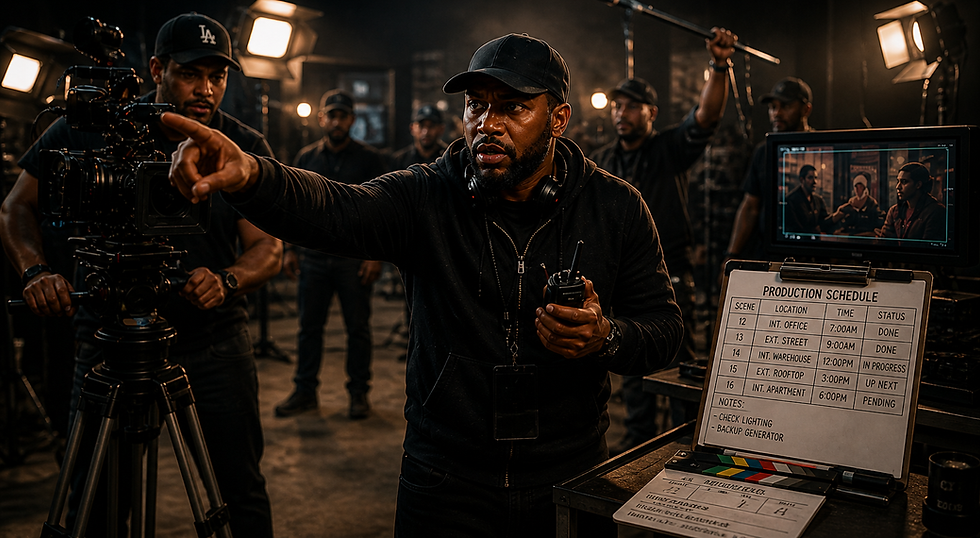
The Producer is often the person in the trenches making the movie happen day to day.
This role usually includes:
hiring crew
managing budgets
locking locations
organizing schedules
coordinating production logistics
solving problems on set
making sure departments communicate
helping keep the film on track creatively and financially
In short:
The Producer is the engine that keeps production moving.
If something goes wrong — scheduling issues, crew conflicts, location problems, budget overruns, missing equipment — the producer is usually involved in finding solutions.
A great producer is part:
problem solver
organizer
negotiator
leader
business manager
creative partner
They keep chaos from taking over.

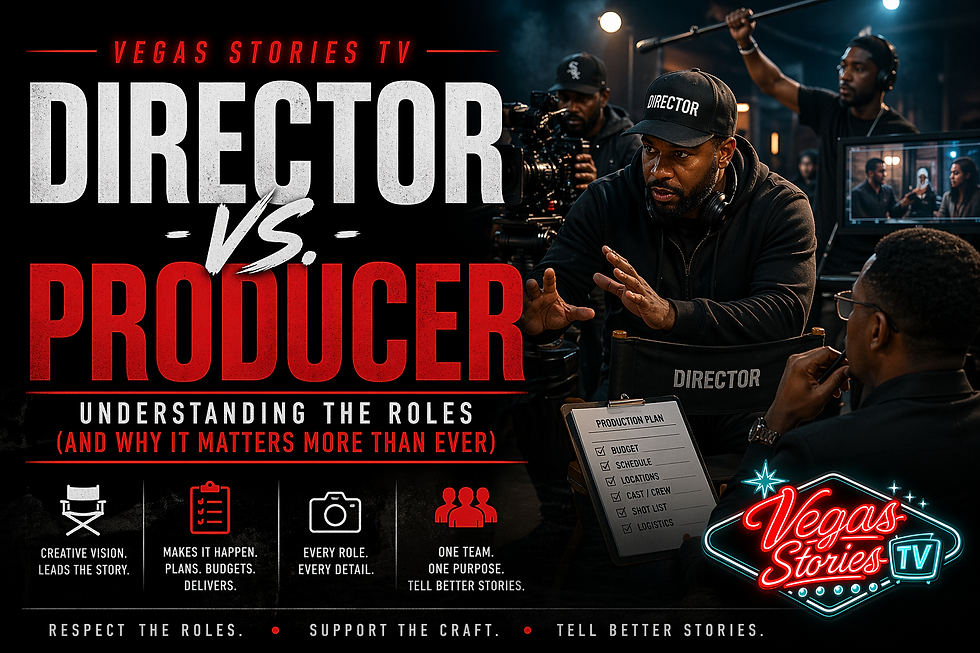
Executive Producer vs Producer
Executive Producer
Focuses on:
financing
business relationships
project packaging
strategic oversight
high-level approval
distribution opportunities
Producer
Focuses on:
daily operations
crew coordination
budgeting
scheduling
locations
production management
keeping the shoot moving
One builds the opportunity.
One builds the movie.
Both are critical.
Independent Filmmaking Changes Everything
In independent film, roles often overlap.
A filmmaker may be:
Executive Producer
Producer
Writer
Director
Editor
Distributor
—all at once.
That’s the reality of indie filmmaking.
Many independent creators wear multiple hats simply because budgets are tight and teams are small.
That doesn't make the work smaller — it often makes it harder.
Independent filmmakers regularly build full productions with limited resources, long hours, and pure determination.
Real World Example
Imagine someone finances a movie, helps package it, connects the project to distribution, and oversees major business decisions.
That person may be acting as an Executive Producer.
Now imagine another person:
hires crew
secures equipment
locks shooting dates
manages cast communication
handles location issues
solves day-of production problems
That person is acting as the Producer.
Both are leaders — just in different lanes.
Final Thought
A lot of people throw around titles in filmmaking.
But titles mean less than responsibility.
A real Executive Producer creates opportunity.
A real Producer creates execution.
When both roles are strong, projects get finished — and audiences get something worth watching.
At the end of the day, filmmaking isn't about fancy credits.
It's about building something real.
And getting it done.

Comments